Tata Motors Adopts Dual-Fuel System to Keep Production Running
By Jony Shekhawat | Published Date : April 16, 2026
Tata Motors adopts a flexible dual-fuel strategy to maintain production stability and tackle supply disruptions linked to West Asia energy challenges.
Tata Motors is taking a practical step to deal with ongoing energy disruptions linked to West Asia. The company has started using a dual-fuel strategy in its manufacturing process, which helps plants continue operations even when fuel supply becomes uncertain.
Instead of depending on one fuel source, Tata Motors can now switch between fuels easily. This approach is helping them avoid production stops, which otherwise could have impacted supply of Tata trucks and other vehicles.
Switching Between LPG and LDO
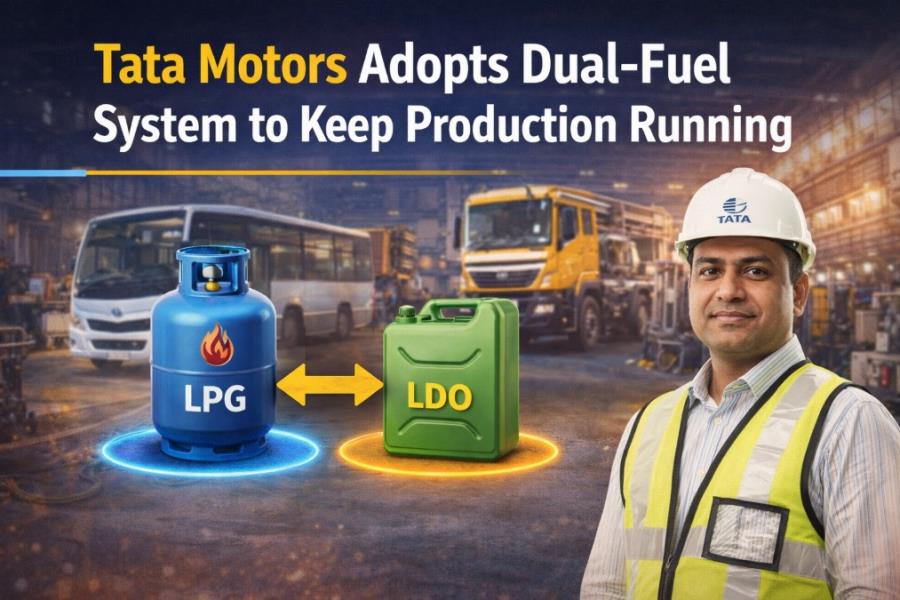
Table of Contents
| 1. Switching Between LPG and LDO |
| 2. Ensuring Smooth Production at Plants |
| 3. Support Extended to Suppliers |
| 4. Strong Strategy for Uncertain Times |
► Read More: Castrol India Brings Full Synthetic Upgrade to Activ and GTX Oils
As part of this strategy, the company is using options like Liquefied Petroleum Gas (LPG) and Light Diesel Oil (LDO). If one fuel faces shortage or price spike, they can quickly shift to another one without much delay.
Vishal Badshah, who is Vice President and Head of Operations, said that proper risk assessment helped them prepare in advance. The company earlier depended more on fuels like LDO, but now they are also moving towards alternatives like propane for better stability. This flexibility is helping keep production lines running, even when external conditions are not very stable.
Ensuring Smooth Production at Plants
The biggest advantage of this dual-fuel system is that factories don’t have to stop work. If supply chain gets disturbed in one fuel category, operations can still continue by using another fuel.
Badshah explained that some processes were redesigned so they can run on more than one type of fuel. This small but important change is making a big difference, specially in current situation. Because of this, production of Tata commercial vehicles, including Tata buses, is not getting affected much.
Support Extended to Suppliers
Tata Motors also understands that supply chain is very important. If suppliers face issues, then company will also face problems. So they helped their vendors to adopt similar dual-fuel systems.
Suppliers were guided to switch between fuels like LPG and LDO when needed. This way, even if cost increases or supply gets disturbed, vendors can manage operations without stopping production. This step is like a safety backup, helping both company and suppliers handle sudden changes better.
Strong Strategy for Uncertain Times
This dual-fuel approach is more like a long-term strategy now. It is not just about handling current crisis, but also preparing for future uncertainties. With global situations changing frequently, companies need flexible systems. Tata Motors seems to have taken a smart step in that direction.
Overall, this move is helping maintain steady production of vehicles like Tata Ace and other models, while also protecting the company from sudden energy shocks. Even though situation is still uncertain, this strategy looks quite effective for now.
► Read More: India Brings New Overloading Rules on Highways from April 15
Frequently Asked Questions on Commercial Vehicles
Q1. What is the price range of Tata commercial vehicles in India?
Ans. Tata commercial vehicles start from around ₹4–5 lakh for small vehicles like Tata Ace and can go up to ₹30 lakh or more for heavy trucks depending on model and features.
Q2. Which is the most popular Tata mini truck?
Ans. Tata Ace is one of the most popular mini trucks in India, widely used for last-mile delivery and small cargo transport.
Q3. What types of Tata commercial vehicles are available?
Ans. Tata offers a wide range including trucks, buses, pickups, tippers and mini trucks designed for different business and transport needs.
Q4. Are Tata commercial vehicles good for long-distance transport?
Ans. Yes, many Tata trucks are designed for long-distance operations with good fuel efficiency, strong build quality and reliable engine performance.
Join us for the latest updates on the Truck Industry -
☞  Facebook
☞  Instagram
☞  YouTube
☞  Twitter
☞  LinkedIn
☞  Threads

About the Author

Jony Shekhawat
Jony Shekhawat is a skilled content writer at TrucksBuses.com, one of India’s top platforms for commercial vehicle news and reviews. With roots in social work and a keen interest in the logistics and mobility space, Jony crafts content that is both insightful and easy to understand. He specializes in breaking down complex commercial vehicle trends, helping readers make informed decisions. His writing not only informs but also aims to support the growth of India's transport community through knowledge and awareness.