Simple Ways To Improve Fuel Efficiency In Commercial Trucks
By Jony Shekhawat | Published Date : June 10, 2026
Fuel efficiency plays a major role in reducing operating costs, making it one of the most important factors for truck owners and fleet operators.
A few months ago, a transport operator shared an interesting problem. He had two trucks running on almost the same route. The load was similar, the vehicles were maintained regularly and there was no major difference in their condition. Still, one truck was consuming more fuel than the other.
At first, he suspected a mechanical issue. After several checks, nothing serious was found. The answer was much simpler. Several small day-to-day factors were affecting fuel usage without anyone noticing. This situation is common across the commercial vehicle industry. Owners of Tata trucks, Eicher trucks and even large 18-wheeler trucks often face the same challenge.
Fuel Is Often Lost In Small Ways
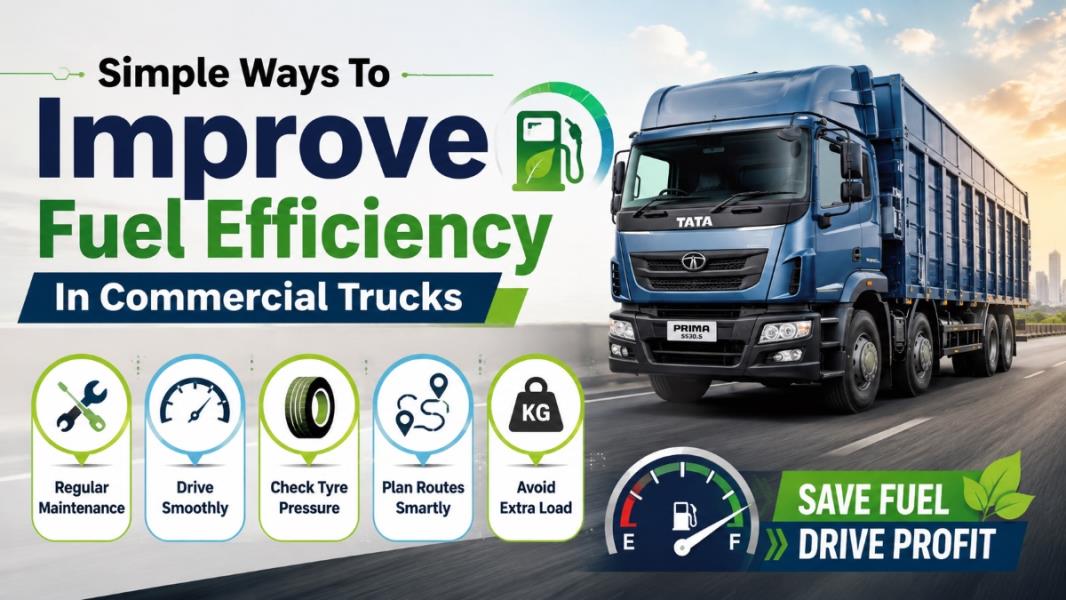
Table of Contents
| 1. Fuel Is Often Lost In Small Ways |
| 2. Road Conditions For Vehicles |
| 3. Maintenance Of Tyres |
| 4. Overloading Affects |
| 5. What Experienced Fleet Owners Usually Do |
► Read More: Best Electric Pickup: Either Tata or Eicher For Logistics Business
When people talk about mileage, they usually look at the engine first. But fuel is not always lost because of a mechanical problem. Take idling as an example. At warehouse loading points and transport hubs trucks are often left running while the drivers wait. A few minutes here and a few extra minutes there may seem like they do not matter but the truck keeps burning fuel even though the truck is not moving. The truck is still using fuel when it is just sitting there and all those minutes add up to a lot, over weeks and months. The truck is wasting fuel when the truck is not even moving an inch.
Road Conditions For Vehicles
Not every road is kind to fuel. Some routes might be short, on paper. Have lots of traffic, many stops and long waits. Many people who manage fleets have seen that a bit longer route can sometimes save fuel because traffic moves smoothly. This is why planning routes has become a part of managing a fleet.
Maintenance Of Tyres
Ask experienced transporters about mileage and many of them will immediately mention tyres. A tyre with incorrect pressure makes the vehicle work a lot harder. You might not notice the difference on a trip but when you drive thousands of kilometres, you start to see the impact of a tyre with incorrect pressure.
People who drive 10-wheeler trucks and 12-wheeler trucks always check the tyre conditions because even a tiny drop in pressure can make their operating expenses go up over time. They have to keep an eye on the tyres all the time because a tyre with incorrect pressure can make a big difference.
Overloading Affects
Some businesses try to maximise every trip by adding extra weight whenever possible. While that may look profitable initially, it can increase fuel consumption. Companies running Ashok Leyland tippers and other heavy-duty trucks understand this well. An overloaded vehicle places additional pressure on the engine and other components. The result is often higher running costs. In many cases, better load planning proves more useful than simply adding more cargo.
What Experienced Fleet Owners Usually Do
One thing becomes clear after talking to transport operators. The most successful fleets rarely depend on a single trick to improve mileage. Instead, they focus on basic habits. Vehicles are serviced on time, tyre pressure is checked regularly, routes are reviewed and drivers are encouraged to avoid unnecessary fuel wastage.
For businesses operating commercial vehicles, mini trucks, Tata trucks, Eicher trucks and long-haul transport fleets, fuel efficiency is usually built through consistency. Small improvements may not look impressive on a single day, but over an entire year they can make a noticeable difference to operating costs and profitability.
► You Might Like: Detailings Of Tata Intra V40 Bi-Fuel Pickup
Frequently Asked Questions on Commercial Vehicles
Q1. What is the average price of a commercial vehicle in India?
Ans. Commercial vehicle prices vary by segment. Small cargo vehicles can start from around ₹4 lakh, while heavy-duty trucks and tippers can cost more than ₹40 lakh depending on specifications and applications.
Q2. What is the loading capacity of a mini truck?
Ans. Most mini trucks offer a payload capacity ranging from 600 kg to 1,500 kg. The exact loading capacity depends on the vehicle model, wheelbase and intended use.
Q3. Which commercial vehicles offer good mileage?
Ans. Mileage varies according to vehicle type, load and driving conditions. Light commercial vehicles generally offer better fuel efficiency than heavy-duty trucks used for long-haul transportation.
Q4. What factors affect the resale value of a commercial vehicle?
Ans. Vehicle age, maintenance history, mileage, condition, brand reputation and market demand are some of the key factors that influence the resale value of commercial vehicles.
Join us for the latest updates on the Truck Industry -
☞ 
 Facebook
☞  Instagram
☞  YouTube
☞  Twitter
☞  LinkedIn
☞  Threads

About the Author

Jony Shekhawat is a skilled content writer at TrucksBuses.com, one of India’s top platforms for commercial vehicle news and reviews. With roots in social work and a keen interest in the logistics and mobility space, Jony crafts content that is both insightful and easy to understand. He specializes in breaking down complex commercial vehicle trends, helping readers make informed decisions. His writing not only informs but also aims to support the growth of India's transport community through knowledge and awareness.