Tata Motors Bets on Data to Shape the Future of Commercial Vehicles
By Jony Shekhawat | Published Date : June 27, 2026
Tata Motors says its Fleet Edge platform now gathers 12 petabytes of connected vehicle data from over one million commercial vehicles, helping improve product development, fuel efficiency and AI-powered fleet management across India.
Jun 27, 2026 | 4 min read | Industry News
At Tata Motors' recent Investor Day, the conversation was not limited to new trucks or future business plans. One number grabbed plenty of attention — 12 petabytes of data. According to TV Swaminathan, who leads the company's digital business, this massive amount of information is collected through Fleet Edge, Tata Motors' connected vehicle platform that now monitors more than one million trucks and buses across India.
For the company, this data is not simply being stored. It is helping engineers understand how vehicles perform in real-world conditions, so future products can be improved using actual operating data instead of only test-track results.
Why 12 Petabytes Is a Big Deal
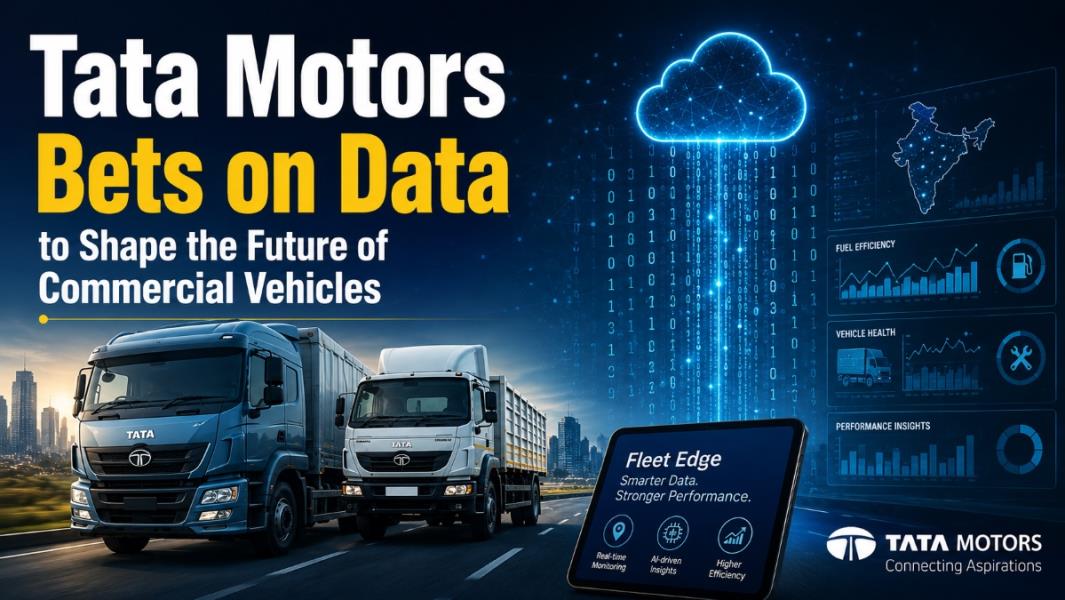
Table of Contents
| 1. Why 12 Petabytes Is a Big Deal |
| 2. The Real Advantage Lies in Where the Data Comes From |
| 3. A Growing Trend Across the Industry |
| 4. The Bigger Test Is Still Ahead |
► Read More: Haryana Uses Tax Waivers To Push Commercial Fleet Renewal in NCR
To understand the scale, one petabyte equals nearly one million gigabytes. Twelve petabytes is an enormous amount of information for a commercial vehicle manufacturer, even though technology companies deal with much larger databases every day.
What makes Tata Motors' figure important is not just the storage size. The company has built this database by collecting information from vehicles operating daily on Indian roads since Fleet Edge was introduced in 2020. Every trip adds useful insights related to engine performance, fuel usage, braking behaviour and vehicle health. As more mini trucks and heavy commercial vehicles become connected, such information is becoming a valuable business asset.
The Real Advantage Lies in Where the Data Comes From
Company officials believe the biggest strength is not the quantity of data but its source. Since Tata Motors installs telematics hardware directly at the factory, it can collect deeper engineering-level information from every connected vehicle.
Unlike third-party telematics providers that only access limited vehicle signals after delivery, factory-fitted systems allow Tata Motors to study component wear, drivetrain behaviour and overall vehicle efficiency much more closely. The company has been fitting connected hardware in its commercial vehicles since 2012, giving it years of experience before many competitors expanded in this space. This long history may provide an advantage that newer software companies cannot build overnight, even with significant investments.
A Growing Trend Across the Industry
Tata Motors is not alone in focusing on connected vehicles. Commercial vehicle manufacturers around the world are investing heavily in digital platforms and telematics as fleet operators demand better productivity and lower operating costs.
Several global manufacturers are already building connected services around trucks and buses, while the commercial vehicle telematics market continues to grow rapidly. Demand for connected electric mini trucks and smart fleet solutions is also increasing as transport businesses adopt more digital technologies.
The Bigger Test Is Still Ahead
While collecting huge volumes of data sounds impressive, the real question is whether it can improve the vehicles customers drive every day. Tata Motors highlighted two examples during its presentation. The first is Mileage Sarathi, an AI-powered tool designed to help fleets improve fuel efficiency. The company says the system has delivered a median fuel-saving improvement of around 6–7% across tested fleets. It has also introduced a mileage guarantee programme where customers may receive compensation if promised fuel-efficiency targets are not achieved.
These initiatives suggest the company wants to move beyond selling vehicles and offer software-backed services as well. If this approach continues to deliver measurable results, connected data could become just as important as engines, payload capacity and manufacturing quality in the future. As digital technology becomes a bigger part of commercial mobility, manufacturers of pickup trucks and larger transport vehicles may increasingly compete through software and connected services alongside traditional engineering.
► You Might Like: Himadri Speciality Chemical Raises Stake in International Battery Company
Frequently Asked Questions on Commercial Vehicles
Q1. What is the average price of a commercial mini truck in India?
Ans. The price of a commercial mini truck usually starts from around ₹4 lakh and can go beyond ₹9 lakh (ex-showroom), depending on the brand, payload capacity, fuel type, and features.
Q2. What is the loading capacity of commercial mini trucks?
Ans. Most commercial mini trucks offer a loading capacity between 600 kg and 1,700 kg. The right capacity depends on the type of goods you transport and your daily business needs.
Q3. Which fuel option gives better mileage in a mini truck?
Ans. Diesel mini trucks generally provide better mileage for long-distance operations, while CNG models are more economical for city use. Electric mini trucks can offer the lowest running cost for short urban deliveries.
Q4. Is financing available for buying a new commercial mini truck?
Ans. Yes. Most manufacturers and banks offer commercial vehicle loans with flexible EMI options. The loan amount and interest rate usually depend on your credit profile, business income, and down payment.
Join us for the latest updates on the Truck Industry -
☞ 
 Facebook
☞  Instagram
☞  YouTube
☞  Twitter
☞  LinkedIn
☞  Threads

About the Author

Jony Shekhawat
Jony Shekhawat is a skilled content writer at TrucksBuses.com, one of India’s top platforms for commercial vehicle news and reviews. With roots in social work and a keen interest in the logistics and mobility space, Jony crafts content that is both insightful and easy to understand. He specializes in breaking down complex commercial vehicle trends, helping readers make informed decisions. His writing not only informs but also aims to support the growth of India's transport community through knowledge and awareness.