Which Truck Tyre Brand Should You Choose: CEAT vs Apollo?
By Amit Jangra | Published Date : June 22, 2026
CEAT and Apollo are both popular truck tyre brands, but the right choice depends on route conditions, load requirements and operating costs.
Jun 23, 2026 | 4 min read | Tyres & Maintenance
Spend some time around transport operators and sooner or later the tyre discussion will start. Somebody will say CEAT is better. Another person sitting nearby will immediately disagree and start praising Apollo. Sometimes another transporter joins the conversation and says, "I have used both." After that, everyone starts sharing their own experiences. That is why this discussion never really ends.
The truth is quite simple. Many fleet owners say the real test happens on the road. A tyre may perform very well for one transporter but another operator may have a different experience depending on the routes being used. For people managing trucks every day, tyres are not just another spare part. They are connected to fuel costs, downtime, maintenance expenses and even delivery schedules.
Why Tyres Matter More Than Many People Think
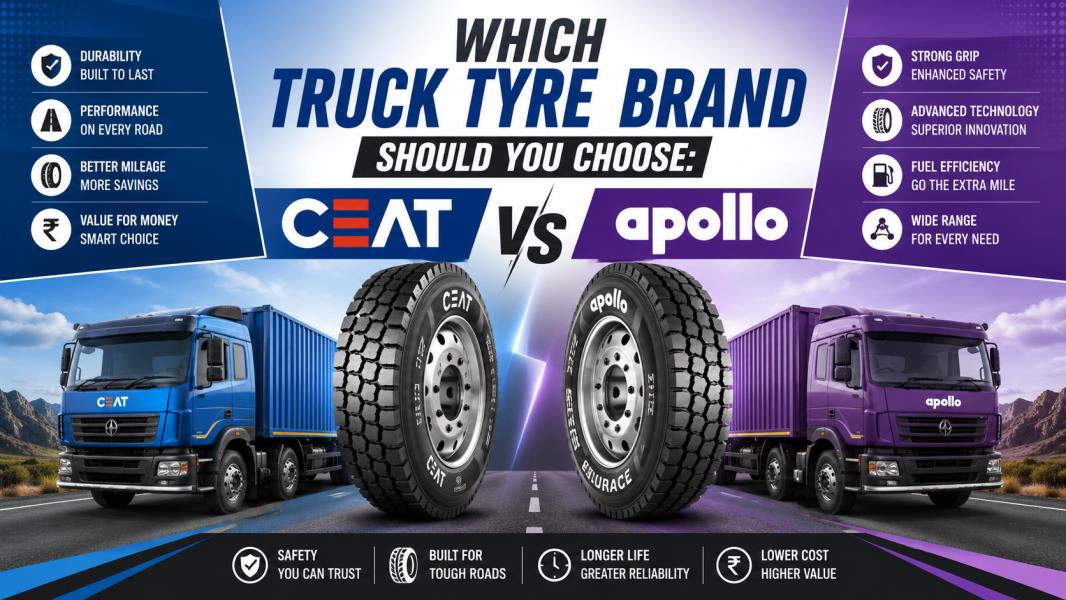
Table of Contents
| 1. Why Tyres Matter More Than Many People Think |
| 2. Why Some Transporters Prefer CEAT |
| 3. Why Apollo Has Built a Strong Following |
| 4. The Real Question Is Not CEAT or Apollo |
| 5. Looking at Long-Term Costs |
| 6. What About Electric Trucks? |
| 7. What Experienced Operators Usually Do |
| 8. Final Thoughts |
Read More: Tata Intra EV vs Bolero Maxx Pik-Up City Diesel Pickup Battle
When somebody buys a commercial vehicle, most attention goes to the engine. People discuss horsepower, mileage and payload capacity. Tyres usually get attention only when replacement time arrives.
But if you ask an experienced fleet owner, many will tell you that tyres can have a direct effect on business performance. Poor tyre performance may increase operating costs. Frequent replacements can affect profits. Unexpected tyre issues can also delay deliveries.
A transporter running trucks across different states may cover thousands of kilometres every month. Even a small difference in tyre life can become important over such distances. That is why operators spend so much time comparing brands before making a purchase.
Why Some Transporters Prefer CEAT
CEAT has been present in the Indian market for a very long time. Many transport operators have grown familiar with the brand because they have used it for years. One reason some people stay with CEAT is simple habit. They know how the tyres perform. They know what kind of life they can expect. They understand how the tyres behave on routes they use regularly.
Sometimes transport business decisions are not based on advertisements. They are based on experience collected over many years. A fleet owner who has seen acceptable performance from CEAT tyres may see no reason to switch.
Availability is another thing people mention. If a replacement is needed during a trip, finding support can become important. Many operators consider this factor before buying tyres for their trucks. Some transporters also feel comfortable continuing with a brand that has already worked well for them in the past.
Why Apollo Has Built a Strong Following
Talk to long-distance operators and you will often hear the name mentioned. Some fleet managers have been using Apollo products for years and continue doing so because they trust the brand.
The transport industry is built around reliability. A vehicle standing idle does not earn money. Because of this, many operators look for products that have already proven themselves under real working conditions.
Many transport companies compare tyre life carefully. They keep records, track maintenance costs and observe performance over time. These practical observations often influence future buying decisions.
For some operators, Apollo has delivered results that make them stay with the brand. For others, the experience may be different. That is why tyre discussions rarely end with everyone agreeing.
The Real Question Is Not CEAT or Apollo
Many people ask which brand is better. A more useful question may be: better for what?
A vehicle carrying construction material on rough roads has different requirements compared to a truck running mainly on highways.
- Road quality matters.
- Weather conditions matter.
- Cargo weight matters.
- Distance travelled matters.
- Even driving style can affect tyre performance.
This is why one transporter may strongly recommend CEAT while another recommends Apollo. Both could be correct based on their own experience. Instead of searching for a universal winner, operators often get better results by focusing on their actual business needs.
Looking at Long-Term Costs
Many people first look at the price tag. But transport operators know that the cheapest tyre does not always save money. If it wears out early, another replacement has to be bought sooner. What matters is the total cost over the tyre's life.
Many fleet owners examine:
- Expected running life
- Maintenance history
- Availability of service support
- Fuel efficiency impact
- Replacement frequency
- Overall operating costs
That is why experienced transporters rarely focus on only one number. They prefer seeing how the tyre performs over time before deciding whether it was a good purchase.
What About Electric Trucks?
The transport industry is changing slowly. Electric trucks are becoming more visible in different parts of the world. Their numbers are still small compared to traditional diesel vehicles, but the market is moving in that direction.
This change could also influence tyre development. Electric trucks deliver power differently. Battery packs add weight. Operating characteristics are not exactly the same as conventional vehicles.
Vehicle technology is changing little by little. Most transport companies still use diesel trucks today, but people in the industry believe things may look different after a few years. Because of that, tyre companies are also keeping an eye on new requirements.
What Experienced Operators Usually Do
Interestingly, many successful transporters do not rely only on reviews.
- They talk to drivers.
- They study maintenance records.
- They compare actual operating data.
Drivers often notice things that numbers cannot fully explain. Road grip, ride comfort and general performance become clear only after months of use. Fleet owners who collect feedback from drivers sometimes make better tyre decisions than those relying purely on marketing material. Practical experience remains one of the most valuable tools in the transport business.
Final Thoughts
The CEAT versus Apollo debate will probably continue for many years. Both brands have strong reputations. Both are widely used. Both have supporters who believe they made the right choice. Instead of looking for a simple winner, it may be better to focus on your own requirements.
- Look at your routes.
- Look at your cargo.
- Look at your operating conditions.
- Most importantly, look at your previous experience.
The best tyre is usually the one that helps your business run smoothly day after day. Whether that turns out to be CEAT or Apollo depends less on brand names and more on the work your trucks perform every single day.
You Might Like: Best Pickup and Cargo Vehicles for Monsoon: Features That Matter Most
Frequently Asked Questions on Commercial Vehicles
1. Which is better for trucks, CEAT or Apollo?
Ans: Both brands are widely used. The better choice depends on your routes, load conditions, driving patterns and operating requirements.
2. Why are truck tyres important for transport businesses?
Ans: Truck tyres affect fuel efficiency, vehicle uptime, maintenance costs, safety and overall operating expenses.
3. What factors should be considered before buying truck tyres?
Ans: Buyers should consider tyre life, road conditions, load capacity, service support, maintenance requirements and long-term costs.
4. Are tyre requirements different for electric trucks?
Ans: Yes. Electric trucks can have different weight distribution and power delivery, which may influence tyre performance and wear patterns.
Join us for the latest updates on the Truck Industry -
☞ 
 Facebook
☞  Instagram
☞  YouTube
☞  Twitter
☞  LinkedIn
☞  Threads

About the Author

Amit Jangra
Amit Jangra is a dedicated content writer at TrucksBuses.com, a leading Indian portal for commercial vehicle insights. With a strong background in social work and a passion for the transportation sector, Amit brings a unique perspective to his writing. His articles are known for their clarity and depth, making complex topics accessible to a broad audience. Amit's commitment to empowering readers through informative content reflects his broader mission of societal upliftment.