SIAM Opens Sustainable Mobility Week in New Delhi, Pushes Multi-Fuel Plan
By Jony Shekhawat | Published Date : February 17, 2026
Multi-Fuel Strategy, electric trucks and clean commercial vehicles take centre stage.
The Society of Indian Automobile Manufacturers (SIAM) on Monday kicked off its Sustainable Mobility Week in New Delhi. The four-day programme is being held at India Habitat Centre and will run until February 19.
The event brings together policymakers, auto industry executives, researchers and international delegates. The focus this year is clear — how to reduce emissions in India’s growing mobility sector without slowing down growth. Topics include decarbonisation, road safety, circularity and material compliance with hydrogen trucks.
4th ISTEM Sets the Tone
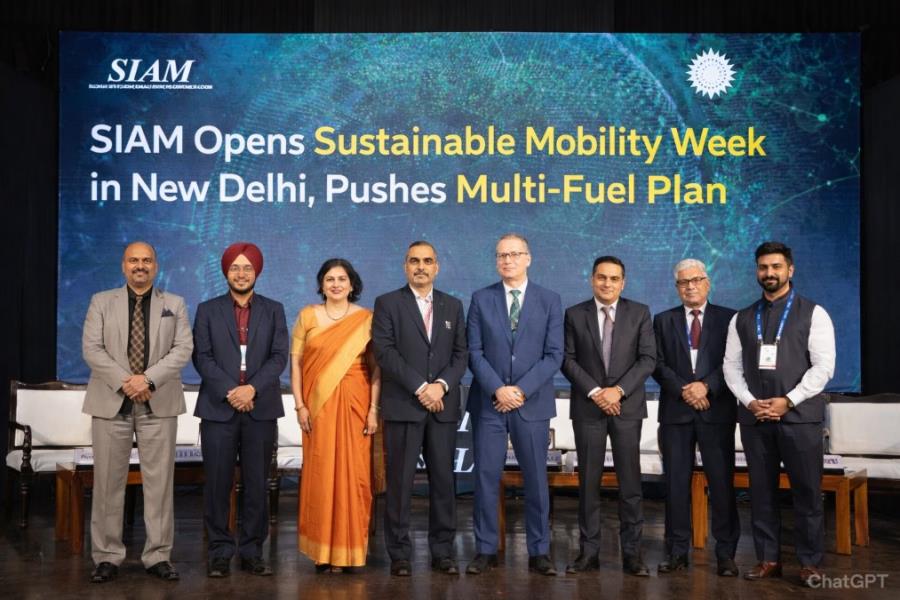
Table of Contents
| 1. 4th ISTEM Sets the Tone |
| 2. 11 Vehicles on Display in Mobility Zone |
| 3. Ethanol Blending and Hydrogen Progress Highlighted |
| 4. What’s Planned in the Coming Days |
Read More: Mining and RMC Companies Trusting Tata Signa trucks for Heavy Work
The week opened with the 4th International Symposium for Thriving Eco-Energy in Mobility (ISTEM). The theme centred on accelerating India’s multi-fuel mobility transition.
Speakers said there is no one single solution for the future. A mix of options will be needed — electric trucks, hydrogen, CNG, LNG, ethanol blending and hybrids were all part of the discussion.
Industry leaders added that mobility is growing fast in India, but they also agreed that sustainability cannot be ignored while chasing growth.
11 Vehicles on Display in Mobility Zone
Alongside the symposium, SIAM unveiled a “Sustainable Mobility Zone” that featured 11 vehicles and several clean technologies. The exhibition had a simple but clear mix of technologies. There were electric buses, some hybrid vehicles, and a few hydrogen-based platforms on display. A couple of models were built to run on ethanol blends too. Gas-powered options like CNG and LNG were also showcased. Along with the vehicles, companies displayed recycling solutions and basic infrastructure support systems needed for these cleaner fuel options.
The message from the exhibition was simple — the future of commercial vehicles in India will be based on multiple energy pathways rather than a single approach.
Ethanol Blending and Hydrogen Progress Highlighted
During the inauguration, SIAM Executive Director Prashant K. Banerjee highlighted India’s achievement of 20% ethanol blending. He said it shows what coordination between government and industry can achieve. Brazil’s long experience with biofuels was mentioned as a useful example.
Government officials spoke in a fairly straightforward way about where things stand today. They said the shift toward cleaner fuels is not just on paper anymore, it is already happening step by step. Ethanol blending, for example, has helped cut down some crude oil imports and at the same time given better support to farmers.
They also mentioned that EV adoption has picked up compared to a few years ago. It is still growing, but the direction is positive. Work is going on in areas like methanol engines, building green energy corridors and testing hydrogen through pilot projects. As costs come down and infrastructure improves, these options may slowly take a bigger share in transport.
What’s Planned in the Coming Days
The event will continue for the next few days with separate focus areas. One day is kept for road safety discussions, where experts and officials will talk about accident reduction and safer mobility practices. The last session will deal with automotive material compliance and sustainability standards, which companies now have to follow more strictly.
Companies like Honda Motorcycle & Scooter India, Cummins, Maruti Suzuki, Praj Industries, NTPC and Toyota Kirloskar Motor are part of these talks. It is not only speeches — there are open discussions about real challenges, policy gaps and what can actually work on the ground.
Also Read: Six Sense Mobility Raises Rs. 44 Crore to Expand Local Automotive Electronics Manufacturing
Frequently Asked Questions on Commercial Vehicles
Q1. What is SIAM Sustainable Mobility Week?
Ans. It is a four-day event in New Delhi focused on clean mobility, electric trucks, electric buses and multi-fuel transition strategies.
Q2. Where is the event being held?
Ans. The programme is taking place at India Habitat Centre in New Delhi.
Q3. What technologies are being discussed?
Ans. Electric trucks, electric buses, hydrogen fuel, ethanol blending, CNG, LNG and hybrid systems are part of the discussions.
Q4. Why is multi-fuel transition important for India?
Ans. A multi-fuel approach reduces emissions, improves energy security and supports sustainable growth in commercial vehicles and public transport.
Join us for the latest updates on the Truck Industry -
☞  Facebook
☞  Instagram
☞  YouTube
☞  Twitter
☞  LinkedIn
☞  Threads

About the Author

Jony Shekhawat
Jony Shekhawat is a skilled content writer at TrucksBuses.com, one of India’s top platforms for commercial vehicle news and reviews. With roots in social work and a keen interest in the logistics and mobility space, Jony crafts content that is both insightful and easy to understand. He specializes in breaking down complex commercial vehicle trends, helping readers make informed decisions. His writing not only informs but also aims to support the growth of India's transport community through knowledge and awareness.