KKR Puts $310 Million into India’s Electric Bus Space with PMI Electro
By Jony Shekhawat | Published Date : March 18, 2026
KKR partners with PMI Electro to boost electric bus manufacturing and fleet expansion across Indian cities.
KKR has decided to invest up to $310 million with PMI Electro Mobility Solutions Private Limited and its platform Allfleet India Private Limited. The announcement came on March 18, 2026, in Mumbai. This is KKR’s first such move in India under its climate-focused strategy.
What the Deal Looks Like
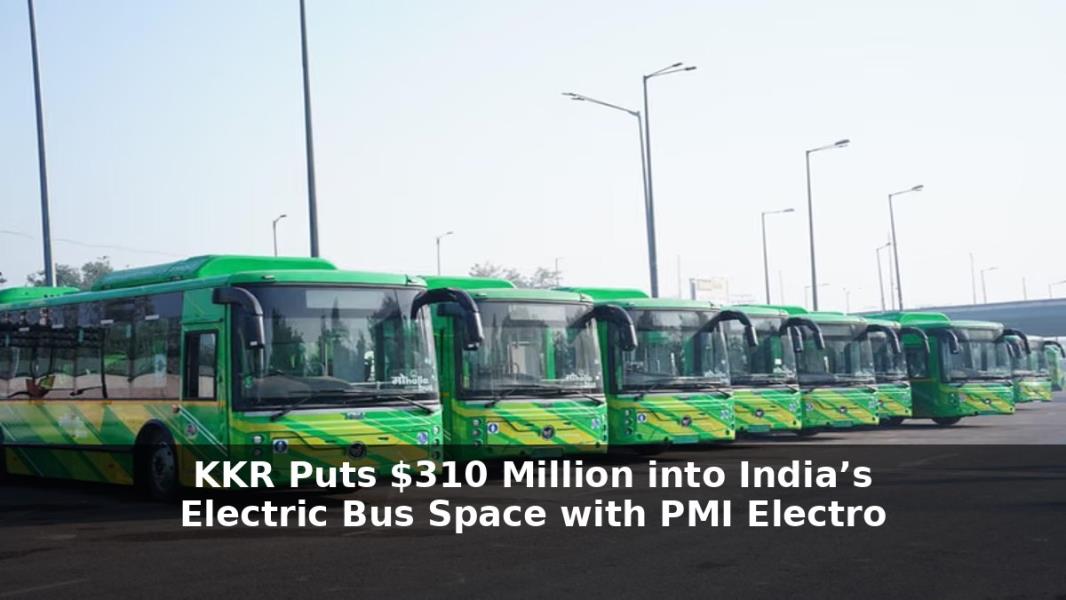
Table of Contents
| 1. What the Deal Looks Like |
| 2. Plan to Grow Bus Operations |
| 3. Manufacturing Side Also Gets Boost |
| 4. Why This Deal is Different |
| 5. India’s Market is Growing Fast |
| 6. What KKR Sees Ahead |
☞ Read More: New Startup of Ashok Leyland on EV Battery Pack Plant
As per the plan, KKR will take a bigger share in Allfleet and a smaller one in PMI Electro. The deal is not closed yet and should be completed around mid-2026 after approvals. The idea is simple—be part of both making and running the buses.
Plan to Grow Bus Operations
Allfleet, which started in 2022, handles running electric buses in cities. The company is already working with different state transport departments and now wants to scale up fast. The target is to have over 5,000 buses on road in the coming time.
Manufacturing Side Also Gets Boost
PMI Electro will use this money to increase production. It already builds school buses in different sizes and has supplied more than 3,000 buses across 30+ cities. With more funds, it can speed up output and meet rising demand.
Why This Deal is Different
Usually, companies invest either in manufacturing or in operations. Here, KKR is doing both. One side builds the buses, the other runs them. This setup helps avoid delays and keeps things under better control.
India’s Market is Growing Fast
Electric buses are slowly picking up in India. Diesel buses still dominate, but cities are now shifting because of pollution concerns. Government support is also helping, though setting up fleets still needs heavy money and planning.
What KKR Sees Ahead
KKR has already spent big on climate projects globally. Now it is looking at India as a strong opportunity. According to its team, the country’s size and demand for clean transport make it a key market going forward. PMI Electro also sees this as a chance to expand quicker and reach more cities.
Read More: Investment of Rs 100 Crore By Cargo Matters in Andhra Pradesh Freight Hub
Frequently Asked Questions on Commercial Vehicles
Q1. What is the average price of an electric bus in India?
Ans. Electric buses usually cost between ₹1 crore and ₹2 crore, depending on size, battery capacity, and features.
Q2. What mileage do electric buses offer on a single charge?
Ans. Most electric buses give a range of around 150 to 300 km per charge, depending on battery size and usage conditions.
Q3. What is the seating capacity of electric buses?
Ans. Seating capacity generally ranges from 25 to 45 passengers, depending on whether it is a midi, standard, or full-size bus.
Q4. How long does it take to charge an electric bus?
Ans. Charging time can vary from 1.5 to 5 hours with fast chargers, while normal charging may take longer depending on battery capacity.
Join us for the latest updates on the Truck Industry -
☞  Facebook
☞  Instagram
☞  YouTube
☞  Twitter
☞  LinkedIn
☞  Threads

About the Author

Jony Shekhawat
Jony Shekhawat is a skilled content writer at TrucksBuses.com, one of India’s top platforms for commercial vehicle news and reviews. With roots in social work and a keen interest in the logistics and mobility space, Jony crafts content that is both insightful and easy to understand. He specializes in breaking down complex commercial vehicle trends, helping readers make informed decisions. His writing not only informs but also aims to support the growth of India's transport community through knowledge and awareness.