JBM Ecolife Gets Rs 750 Crore Boost to Expand Electric Bus Fleet
By Jony Shekhawat | Published Date : June 19, 2026
The electric bus market in India is growing steadily as operators explore cleaner transportation options, while modern buses continue to offer improved passenger comfort, better efficiency and lower operating costs.
Jun 18, 2026 | 2 min read | Buses/E-Mobility
JBM Ecolife Mobility has received an investment of ₹750 crore from Motilal Oswal Alternates. This money will be used to add 2,000 new electric buses. JBM Ecolife Mobility wants to grow its business in the public transport sector in India. JBM Ecolife Mobility is getting ready for its phase of growth. The company received ₹750 crore from Motilal Oswal Alternates.
New Step Of JBM Ecolife Mobility
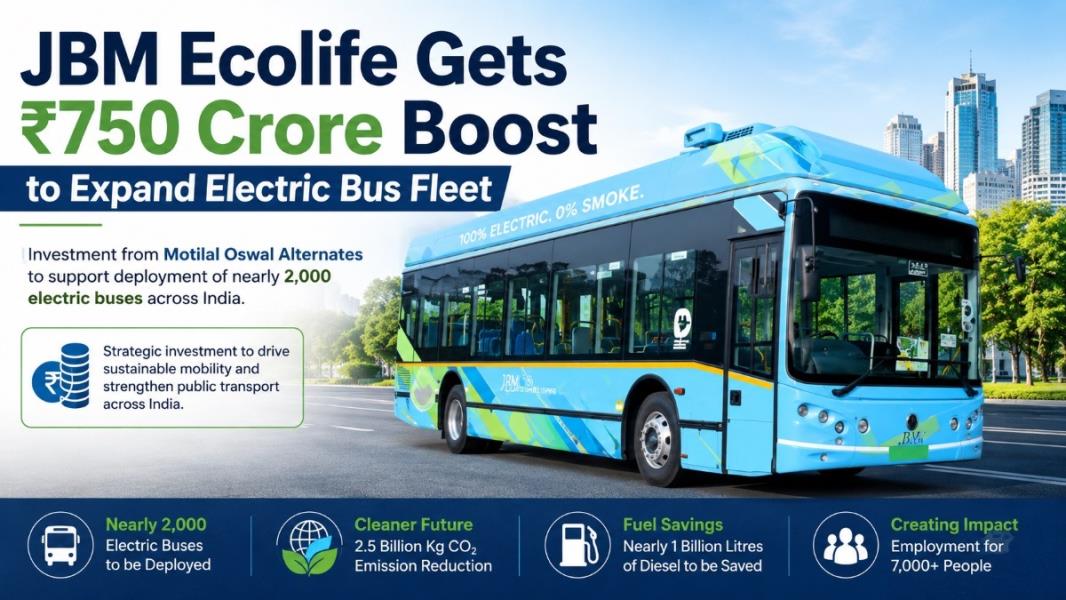
Table of Contents
| 1. New Step Of JBM Ecolife Mobility |
| 2. More Electric Buses on the Road |
| 3. Looking Beyond Fleet Growth |
| 4. Strong Order Pipeline |
| 5. Positioned for the Next Growth Phase |
► Read More: Euler Motors Plans to Double EV Production Capacity Amid Rising Demand
JBM Ecolife Mobility operates buses in many parts of the country. The company will use this money to buy electric buses and build the necessary infrastructure. The company plans to put around 2,000 more buses on the roads in India over the next few years. JBM Ecolife Mobility will work with state transport authorities to make this happen. These electric buses will be deployed under term agreements with the state transport authorities.
More Electric Buses on the Road
Public transport agencies are really interested in buses these days. They want to save money on fuel and reduce pollution. For JBM Ecolife this new investment is news. More and more people want electric 40-seater buses and the company thinks this money will help it grow fast. JBM Ecolife already has lots of buses running. JBM Ecolife has 3,400 electric buses, on the road right now. They think they will have 5,000 electric buses in the next year if everything goes according to plan.
Looking Beyond Fleet Growth
The company is not only adding vehicles. It is also investing in the infrastructure needed to support a larger electric bus network. According to JBM Ecolife, the planned deployment could save close to one billion litres of diesel during the lifetime of the buses. The company also estimates a significant reduction in carbon emissions as more diesel buses are replaced by electric alternatives.
Another expected benefit is job creation. JBM believes the expansion programme could create work opportunities for more than 7,000 people across different areas of the business.
Strong Order Pipeline
JBM Auto and JBM Ecolife together currently have an order book of over 10,000 electric buses. These vehicles are actually on the road now. The rest of them are being worked on. The company also has a place where they make buses in the Delhi-NCR region. This place can make up to 20,000 buses every year so the company has the space to handle more people who want these electric Tata buses in the future. The company can make a lot of buses because they have this big place, in the Delhi-NCR region.
Positioned for the Next Growth Phase
Fresh funding usually gives companies more confidence to expand, and this investment appears to do exactly that for JBM Ecolife. With thousands of electric buses already running and many more planned, the company is looking to strengthen its role in India's shift towards cleaner public transportation.
You Might LIke: NITI Aayog Puts Energy Security at the Centre of India's EV Push
Frequently Asked Questions on Commercial Vehicles
Q1. What is the price of an electric bus in India?
Ans. The price of an electric bus depends on its size, battery capacity and seating configuration. In India, electric buses generally cost more than diesel buses because of the battery and electric drivetrain technology used in the vehicle.
Q2. How much time does an electric bus take to charge?
Ans. Charging time varies based on battery size and charger type. Fast charging can take a few hours, while standard charging may require a longer duration. Actual charging time differs from one bus model to another.
Q3. How many passengers can a bus carry?
Ans. Seating capacity depends on the type of bus. Small buses may accommodate around 20 to 30 passengers, while larger city and intercity buses can offer seating for 40 to 55 passengers or more depending on the configuration.
Q4. What is the mileage range of an electric bus?
Ans. Electric buses are usually measured by driving range rather than mileage. Depending on battery capacity, route conditions and passenger load, many electric buses can travel several hundred kilometres on a single charge before needing to be recharged
Join us for the latest updates on the Truck Industry -
☞ 
 Facebook
☞  Instagram
☞  YouTube
☞  Twitter
☞  LinkedIn
☞  Threads

About the Author

Jony Shekhawat
Jony Shekhawat is a skilled content writer at TrucksBuses.com, one of India’s top platforms for commercial vehicle news and reviews. With roots in social work and a keen interest in the logistics and mobility space, Jony crafts content that is both insightful and easy to understand. He specializes in breaking down complex commercial vehicle trends, helping readers make informed decisions. His writing not only informs but also aims to support the growth of India's transport community through knowledge and awareness.