Autos and E-rickshaws Banned, More City Buses on MG Road
By Jony Shekhawat | Published Date : September 17, 2025
City strengthens bus services on MG Road after banning autos and E-rickshaws.
MG Road has seen a major transport change as autos and E-rickshaws have been banned. To ensure passengers don’t face problems, the city bus fleet has been strengthened. With 65 buses now in service, commuters can catch a bus every five minutes from morning till late evening. The move also supports cleaner travel by reducing dependence on 3-wheelers and encouraging the use of electric buses.
Why Ban Auto and E-rickshaws?
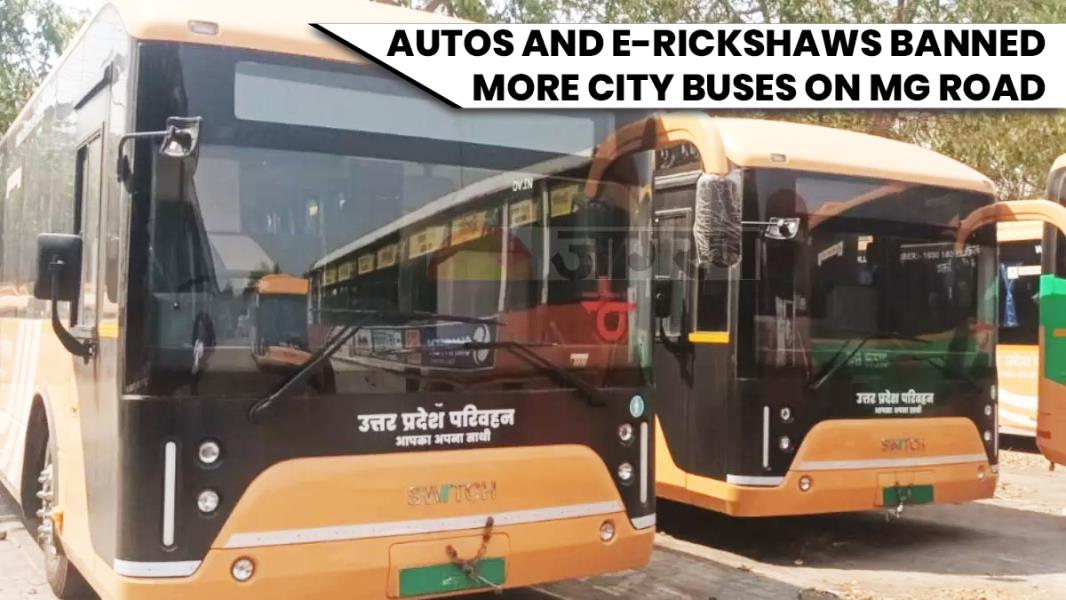
Table Of Contents
| 1. Why Ban Auto and E-rickshaws? |
| 2. More Buses for Passengers |
| 3. Routes and Connectivity |
| 4. Timings and Frequency |
| 5. Future Plans |
To reduce traffic jams and improve daily travel, the administration has decided to ban autos and E-rickshaws on MG Road in Agra city. Autos were already restricted earlier, but now E-rickshaws have also been stopped completely. This step was taken after discussions between the district administration and the traffic police. The aim is simple—fewer crowds on the main road and smoother rides for passengers.
More Buses for Passengers
Until now, only 36 city buses have been running on MG Road of Agra Cantt. Due to the construction work of Metro Florida includes pipe and road paving in the city, passengers often had to wait too long, especially during office hours. Looking at the growing rush, the number has been raised to 65 buses. Now a bus will be available every five minutes, making travel easier for students, office-goers, and daily commuters. For many people, buses will now replace 3-wheelers as a more reliable option.
Routes and Connectivity
The new bus plan will connect major points such as Agra Cantt, Bhagwan Talkies, Hari Parvat, St. John’s Crossing, Subhash Park, Sai Ki Takia, Abantibai Crossing, Rohata, ISBT, Sadar, Itora, Kakua, Tehra, and Saiyan. With buses arriving every five to ten minutes, passengers no longer need to depend on electric 3-wheelers or autos. The extended service is expected to cover both busy junctions and residential areas.
Timings and Frequency
Buses will start from 5 in the morning and run till 11 at night. On MG Road itself, a bus will arrive every five minutes, which means people won’t have to stand in long queues anymore. Officials have also said that if the demand rises, more buses, including electric buses, will be added. This step is not just about convenience—it will also help in reducing pollution caused by old autos and unregulated 3-wheelers.
Future Plans
Commissioner Shailendra Kumar Singh has directed the transport department to monitor the performance of the expanded bus network closely. The administration plans to gradually replace more conventional vehicles with electric buses while keeping 3-wheelers and electric 3-wheelers away from restricted routes. The larger vision is to improve the city’s public transport backbone and provide passengers with safe, reliable, and green alternatives.
Also Read: Ashok Leyland Partners with CALB to Build EV Batteries in India
Frequently Asked Questions on Electric Bus
Q1. What is an electric bus?
Ans. An electric bus is a type of bus that runs on electricity instead of fuel like diesel or petrol. It uses batteries to power an electric motor, making it cleaner and quieter.
Q2. How long can an electric bus run on a single charge?
Ans. Most electric buses can run between 150 to 300 kilometers on a single charge, depending on the battery size and city traffic conditions.
Q3. Are electric buses eco-friendly?
Ans. Yes. Electric buses produce no tailpipe emissions, which helps reduce air pollution in cities. They also reduce noise compared to diesel buses.
Q4. How long does it take to charge an electric bus?
Ans. Charging time varies. Fast chargers can charge a bus in 2–4 hours, while standard chargers may take 6–8 hours.
Q5. Do electric buses cost more than regular buses?
Ans. Initially, electric buses are more expensive to buy than diesel buses. However, they save money on fuel and maintenance in the long run, making them cost-effective over time.
Join us for the latest updates on the Truck Industry -
☞  Facebook
☞  Instagram
☞  YouTube
☞  Twitter
☞  LinkedIn
☞  Threads

About the Author

Jony Shekhawat
Jony Shekhawat is a skilled content writer at TrucksBuses.com, one of India’s top platforms for commercial vehicle news and reviews. With roots in social work and a keen interest in the logistics and mobility space, Jony crafts content that is both insightful and easy to understand. He specializes in breaking down complex commercial vehicle trends, helping readers make informed decisions. His writing not only informs but also aims to support the growth of India's transport community through knowledge and awareness.