Tyre Companies Face Cost Pressure in FY27 Even as Demand Remains Good
By Amit Jangra | Published Date : June 07, 2026
Tyre companies are seeing healthy demand in FY27, but rising raw material and transport costs are creating pressure on profits.
Tyre companies are entering FY27 with mixed feelings. On one side, demand is looking fine. On the other side, costs are rising faster than many companies expected. People from the industry say vehicle sales remained strong during FY26. Because of that, tyre demand also stayed healthy. New vehicles need tyres and older vehicles also need replacement tyres after regular use. But now companies are dealing with another issue. Raw material prices have increased and transportation costs are also higher than before. Because of this, many tyre makers are finding it difficult to maintain the same profit levels.
Companies Talk About Rising Expenses
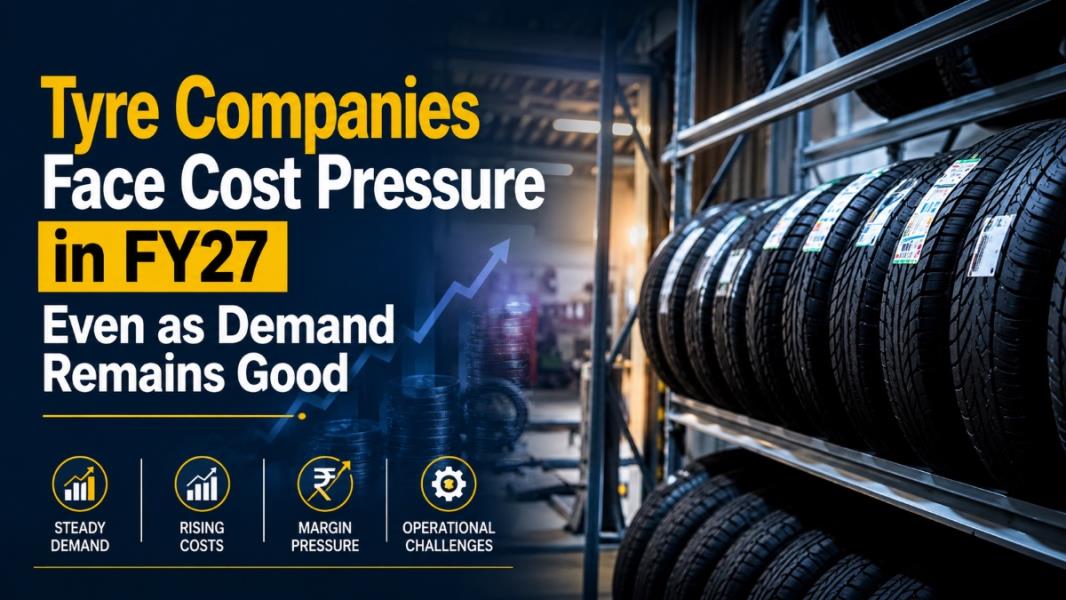
Table of Contents
| 1. Companies Talk About Rising Expenses |
| 2. Demand Still Looks Healthy |
| 3. Expansion Plans Are Not Stopping |
| 4. Replacement Market Will Be Important |
| 5. What Happens Next? |
► Read More: Scania Invests €70 Million In Angers Plant To Build Electric Trucks In France
Several tyre manufacturers have recently spoken about pressure on costs. The situation in West Asia, changes in crude oil prices and a weaker rupee have all added to the problem. Industry executives say nobody knows exactly how long this pressure will continue. For tyre companies, the challenge right now is simple. They need to keep supplying products to the market while also controlling expenses. Some companies have already increased prices and more revisions may happen if costs continue rising.
Demand Still Looks Healthy
Even with these concerns, demand has not disappeared. Commercial vehicles, passenger vehicles and two-wheelers recorded good sales in FY26. That has created steady demand for tyres across different categories. Many transport operators running trucks are still buying replacement tyres because their vehicles remain active on highways and industrial routes. Demand from logistics and delivery businesses is also helping the market.
Expansion Plans Are Not Stopping
Interestingly, companies are continuing with their investment plans. Most major tyre manufacturers are working on expansion projects because existing facilities are already operating at high levels. Vehicles such as mini trucks are being used widely for local deliveries, which also supports tyre consumption. Industry players believe capacity expansion is necessary because demand may continue growing over the next few years.
Replacement Market Will Be Important
People in the tyre business often say that the replacement market tells the real story. When vehicle owners continue buying tyres despite higher prices, it becomes easier for companies to manage rising costs. Operators running buses and fleet vehicles are usually very careful about expenses, so the response from these customers will be watched closely. At the same time, demand from pickups and light commercial vehicles remains fairly stable in many areas.
What Happens Next?
At this time, tyre companies are dealing with both good and bad things. Customers are still buying tyres, which is a positive sign. But expenses are also increasing. If costs come down in the coming months, companies may feel some relief. If not, prices may have to go up again. Everyone in the industry is now waiting to see what happens next.
► You Might Like: Ashok Leyland May Sales Slip as Bus Volumes Stay Under Pressure
Frequently Asked Questions on Commercial Vehicles
1. Why are tyre companies facing pressure in FY27?
Ans: Rising raw material prices, higher logistics costs, crude oil volatility and currency fluctuations are increasing operating expenses for tyre manufacturers.
2. Is tyre demand still strong in FY27?
Ans: Yes, demand remains healthy due to strong vehicle sales, replacement tyre demand and continued activity in transport and logistics sectors.
3. Why are tyre companies increasing prices?
Ans: Companies are raising prices to offset higher production and transportation costs and to protect their profit margins.
4. Which vehicle segments are supporting tyre demand?
Ans: Demand is coming from trucks, buses, mini trucks, pickups, passenger vehicles and two-wheelers across various markets.
Join us for the latest updates on the Truck Industry -
☞ 
 Facebook
☞  Instagram
☞  YouTube
☞  Twitter
☞  LinkedIn
☞  Threads

About the Author

Amit Jangra
Amit Jangra is a dedicated content writer at TrucksBuses.com, a leading Indian portal for commercial vehicle insights. With a strong background in social work and a passion for the transportation sector, Amit brings a unique perspective to his writing. His articles are known for their clarity and depth, making complex topics accessible to a broad audience. Amit's commitment to empowering readers through informative content reflects his broader mission of societal upliftment.