Federation of Automobile Dealers Associations Asks for Role in Delhi EV Policy
By Jony Shekhawat | Published Date : April 18, 2026
Federation of Automobile Dealers Associations urges Delhi government to include dealers in EV policy, highlighting the need for a balance between clean mobility goals and ground-level business realities.
As Delhi government is preparing its EV policy, FADA has said that dealers should also be part of the discussion. They are saying the policy should not be made only on paper, it should match what is happening on ground also.
At a Delhi event, FADA President C S Vigneshwar said that moving to EV is fine, everyone understands pollution issue, but it should happen in a practical way. He said when people are supported, change happens faster. For example, segments like electric trucks are still growing and need time.
Market Growing, But Jobs Also Matter
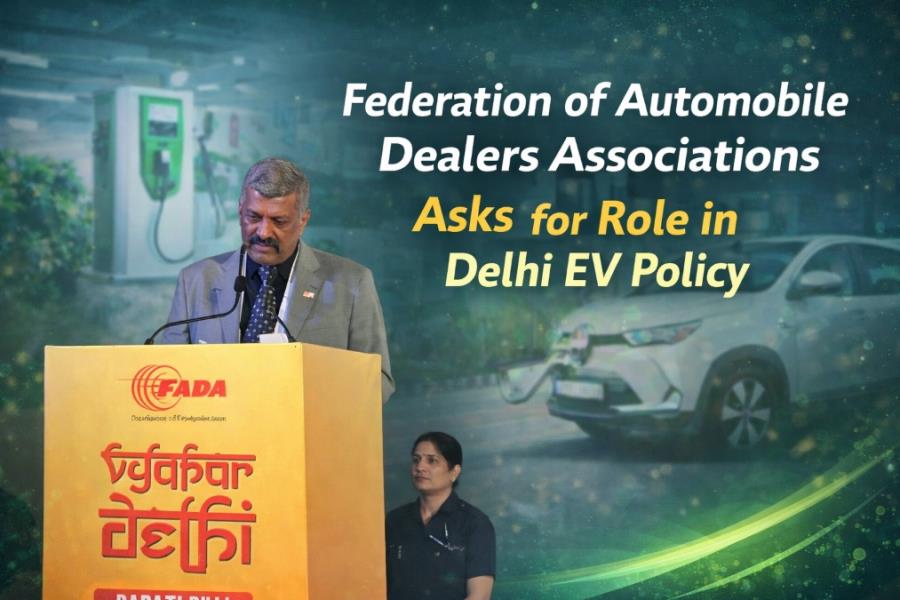
Table of Contents
| 1. Market Growing, But Jobs Also Matter |
| 2. EV Growth is Fast, But Not Same Everywhere |
| 3. Dealers Carry Most of the Work |
| 4. What Dealers Are Asking From Government |
► Read More: NHAI Orders FASTag Issuer Banks to Validate Vehicle Registration Numbers
Vehicle sales in Delhi are doing well. In March 2026, growth was around 17%, which is not small. Two-wheelers, cars and even commercial vehicles all showed an increase.
Around 8 lakh vehicles got registered in one year. Dealers are not small in number also, there are around 550 outlets and about 55,000 people working in this sector. So many families depend on this work, so any sudden change can affect them.
FADA Delhi head Shailendra Gupta also pointed out that dealers give around ₹7,150 crore in taxes every year. That is a big number. He said government should listen to dealer side also, specially now when new areas like pickup trucks are coming.
EV Growth is Fast, But Not Same Everywhere
Electric vehicles are growing in Delhi, that is clearly visible. Two-wheelers EV growth was above 60%, passenger EV also increased, and commercial EV growth was very high, almost 700%.
But still, not all segments are moving same speed. Some are fast, some are slow. Electric buses, for example, are increasing but still depend on proper charging and cost support.
Vigneshwar said one thing simple, that India has already started adopting EVs, it is not just talk now. But he also said growth is not always straight, sometimes it slows also.
Dealers Carry Most of the Work
Dealers are saying they are already doing a lot. They are explaining EVs to customers, handling stock, and also training staff. This change is not easy at ground level.
Shailendra Gupta said clearly that biggest load of this shift is on dealers, not only on companies. Because dealers face customer daily, so all confusion and questions come to them first. That is why FADA wants to be treated like partner, not just seller.
What Dealers Are Asking From Government
FADA has asked for three simple things — stable policy, better infrastructure and job support. They also suggested around 150 charging stations in Delhi and said they are ready to help in it. They also talked about training centres so people can learn EV work. Scrappage policy is supported, but proper centres are still not enough.
In the end, their message is simple. They are not against EVs, they are ready for it. But they want things to move in a balanced way. As segments like electric trucks and electric pickup trucks grow, planning has to be right, otherwise problems can come later.
► You Might Like: Ashok Leyland Launches Twin-Fuel DOST Range with Strong Focus on Earnings
Frequently Asked Questions on Commercial Vehicles
Q1. What is the mileage of commercial trucks in India?
Ans. Most commercial trucks give mileage between 4 to 8 km per litre, depending on load, engine type and road conditions.
Q2. What is the price range of commercial vehicles like trucks?
Ans. Commercial trucks usually start from around ₹7 lakh and can go up to ₹40 lakh or more, based on size, capacity and features.
Q3. What mileage do commercial buses provide?
Ans. Diesel buses generally offer mileage of 3 to 6 km per litre, while electric buses depend on battery range instead of mileage.
Q4. What is the cost of maintenance for commercial vehicles?
Ans. Maintenance costs depend on usage, but diesel vehicles usually need higher maintenance, while electric commercial vehicles have lower running and service costs over time.
Join us for the latest updates on the Truck Industry -
☞  Facebook
☞  Instagram
☞  YouTube
☞  Twitter
☞  LinkedIn
☞  Threads

About the Author

Jony Shekhawat
Jony Shekhawat is a skilled content writer at TrucksBuses.com, one of India’s top platforms for commercial vehicle news and reviews. With roots in social work and a keen interest in the logistics and mobility space, Jony crafts content that is both insightful and easy to understand. He specializes in breaking down complex commercial vehicle trends, helping readers make informed decisions. His writing not only informs but also aims to support the growth of India's transport community through knowledge and awareness.