Impact of Government Policies on the Commercial Vehicle Industry in India
By | Published Date : October 19, 2024
The commercial vehicle industry in India, which includes various types of trucks, plays a crucial role in the country’s economy. This sector encompasses cargo trucks, loading trucks, pickups, and mini trucks, all essential for transporting goods and people. Government policies significantly influence the growth and operations of this industry. In this blog, we will explore how these policies impact the commercial vehicle sector, focusing on regulations, incentives, and infrastructure development.
Understanding the Commercial Vehicle Industry.
The commercial vehicle industry in India is vast and diverse. It supports logistics, transportation, and public services, providing jobs to millions and contributing to economic growth. The success of this sector largely depends on government policies that regulate operations and promote growth.
Key Government Policies Affecting the Industry
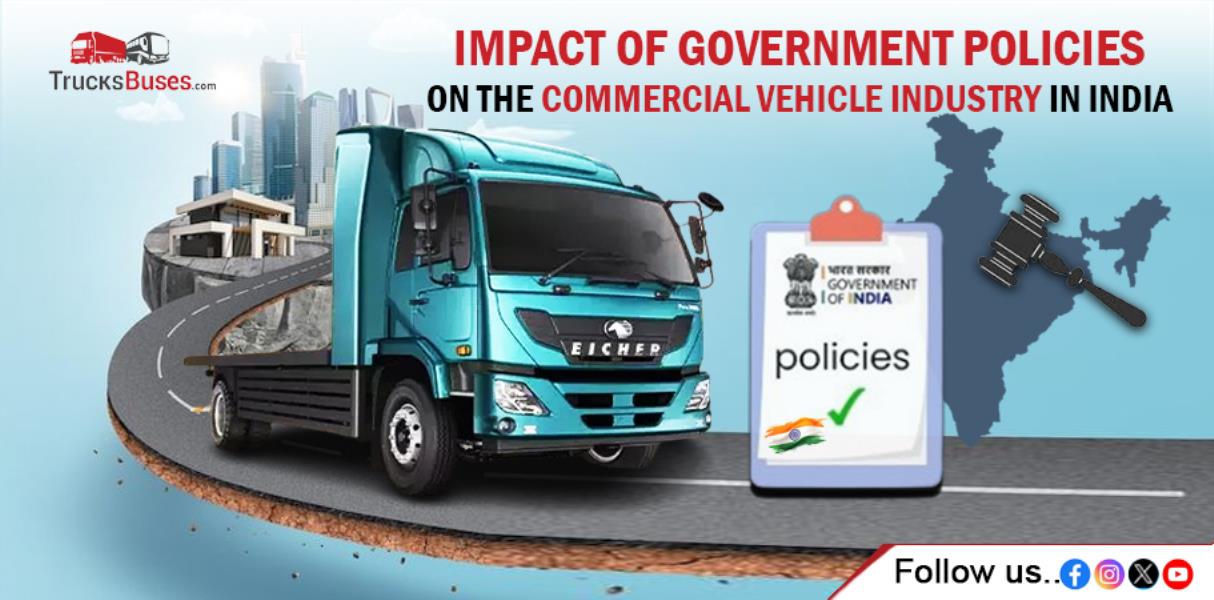
1. Regulatory Framework
The Indian government establishes regulations to ensure safety, environmental protection, and fair competition in the commercial vehicle sector.
Safety Regulations
- Safety is a top priority. The government sets standards for the design and maintenance of trucks, including:
- Crash Tests: Trucks must pass crash tests to ensure passenger safety.
- Emissions Standards: Strict emissions norms, such as the Bharat Stage (BS) standards, regulate harmful gases emitted by vehicles.
2. Tax Policies
Taxation significantly impacts the cost of owning and operating commercial vehicles.
Goods and Services Tax (GST)
- The implementation of GST in 2017 aimed to simplify the tax system for all types of trucks in India. This move had both positive and negative effects:
- Positive Impact: GST reduced the tax burden on transporters, eliminating multiple state taxes and making interstate transportation easier. This led to lower operational costs for businesses operating cargo trucks and loading trucks.
- Negative Impact: Some smaller operators faced challenges in understanding and managing the new tax structure, impacting their ability to comply.
3. Incentives for Electric Vehicles
The Indian government offers incentives for electric commercial vehicles to promote sustainability. These policies are crucial, especially given growing environmental concerns.
FAME India Scheme
- The Faster Adoption and Manufacturing of Electric Vehicles (FAME) scheme provides subsidies for electric trucks and commercial vehicles.
- Benefits: These incentives reduce the initial purchase cost of electric trucks and loading trucks, making them more attractive to fleet operators. This shift also helps in reducing pollution.
4. Infrastructure Development
Government focus on infrastructure has a direct impact on the commercial vehicle industry.
Road Development
- Better roads enhance transportation efficiency. The government invests in highway construction and maintenance, improving connectivity across the country.
- National Highways: Projects like the Bharatmala Initiative aim to develop national highways, crucial for freight movement. Improved roads lead to faster delivery times and reduced cargo and mini truck costs.
Logistic Parks
The establishment of logistic parks serves as hubs for storage and transportation, facilitating better supply chain management and reducing logistical costs for businesses.
5. Make in India Initiative
The "Make in India" initiative encourages domestic manufacturing of vehicles, aiming to make India a global manufacturing hub for commercial vehicles.
Support for Local Manufacturers
- Tax Breaks: This initiative offers tax incentives for local manufacturers, encouraging investment in the industry.
- Technology Transfer: Collaborations with international companies help local manufacturers adopt advanced technologies, improving the quality and efficiency of all types of trucks.
6. Challenges Faced by the Industry
While government policies offer many benefits, the commercial vehicle industry also faces challenges.
Regulatory Compliance
The complexity of regulations can be overwhelming for small operators. Keeping up with safety, emissions, and tax regulations requires resources and knowledge that not all businesses possess.
Fluctuating Fuel Prices
Fuel prices directly impact operational costs for all types of commercial vehicles. Government policies on fuel pricing and subsidies play a crucial role in managing these costs.
7. Future Directions
Looking ahead, the government’s focus on sustainability, infrastructure, and manufacturing will continue to shape the commercial vehicle industry.
Green Mobility
With a growing emphasis on green mobility, the government is likely to introduce more policies promoting electric vehicles, including cargo trucks and loading trucks. This will involve increased subsidies and support for charging infrastructure.
Digital Transformation
The rise of technology in transportation is another area the government is likely to focus on. Policies promoting digital platforms for logistics and transport management will streamline operations and improve efficiency for all commercial vehicles.
How Will Upcoming Emission Standards Affect Truck Manufacturers?
Upcoming emission standards in India will significantly impact truck manufacturers. Stricter rules mean that companies must invest in better technology to reduce harmful emissions from their vehicles. This could lead to higher production costs, which may be passed on to buyers. However, manufacturers that adapt quickly can gain a competitive edge by offering cleaner and more efficient trucks. Meeting these standards can also improve public health and environmental quality. Overall, while the transition may be challenging, it presents opportunities for innovation and growth in the commercial vehicle sector.
Conclusion
Government policies significantly impact the commercial vehicle industry in India. Regulations ensure safety and environmental protection, while tax policies and incentives encourage growth. Infrastructure development enhances connectivity and efficiency, while initiatives like "Make in India" support domestic manufacturing.
While challenges remain, the future looks promising with a focus on sustainability and technological advancements. As the government continues to evolve its policies, the commercial vehicle industry, including trucks, pickups, and mini trucks, must adapt to thrive in this dynamic environment. Understanding these policies is essential for stakeholders to make informed decisions and seize growth opportunities.
Related Blog:
Types of Electric Vehicles: BEVs, HEVs, PHEVs, and FCEVs Explained
6 Best-Selling Used Pickup Trucks in India