MoRTH has granted a seven-year permit exemption for electric trucks, electric buses, pickup trucks, and other ethanol, methanol and hydrogen-powered commercial vehicles with mandatory AIS-140 vehicle tracking systems.
Key points
- Notification Brings Relief Under Motor Vehicles Act
- One Rule Still Applies
- Fleet Expansion May Become Simpler
- Part Of A Bigger Clean Mobility Push
- Clean Mobility Gets Another Policy Push
Transport companies planning to add electric or alternative fuel vehicles to their fleets have received a major policy relief from the Central Government. The Ministry of Road Transport and Highways (MoRTH) has decided that several categories of clean fuel commercial vehicles will not require transport permits for the next seven years. The relaxation covers both goods and passenger vehicles running on battery electric technology as well as hydrogen, ethanol and methanol fuels.
Notification Brings Relief Under Motor Vehicles Act
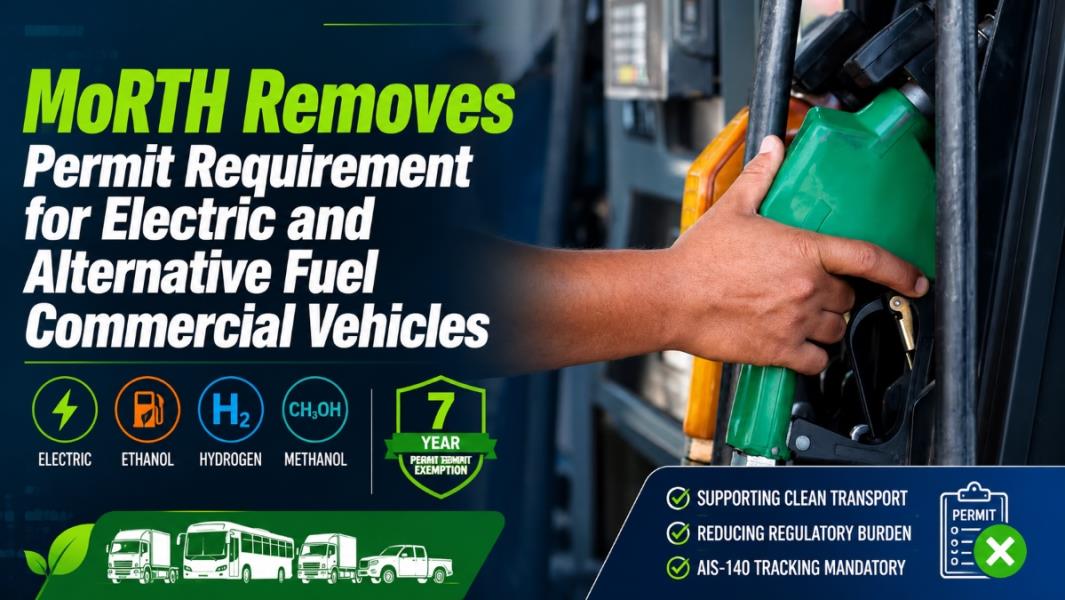
Table of Contents
| 1. Notification Brings Relief Under Motor Vehicles Act |
| 2. One Rule Still Applies |
| 3. Fleet Expansion May Become Simpler |
| 4. Part Of A Bigger Clean Mobility Push |
| 5. Clean Mobility Gets Another Policy Push |
► Read More: Tata Motors Tackles Global Risks with Smart Business Strategy
The decision has been issued through a Gazette notification under Section 66 of the Motor Vehicles Act, 1988. This section normally requires commercial transport vehicles to operate with valid permits before carrying passengers or goods.
With the new notification now in place, eligible clean fuel commercial vehicles like trucks can operate without this requirement. The exemption will remain applicable for seven years from July 6, the date on which the notification was published.
Battery electric commercial vehicles recognised under the Central Motor Vehicles Rules, 1989, are covered under the new provision. Transport vehicles powered by hydrogen, ethanol and methanol have also been included.
One Rule Still Applies
Although permits are no longer required, vehicle tracking has not been relaxed. Every commercial vehicle claiming this exemption must be fitted with a Vehicle Location Tracking Device (VLTD) that meets AIS-140 standards. The system allows authorities to track vehicle movement through GPS and supports emergency response whenever required. So, while operators are getting relief from permit-related formalities, monitoring requirements will continue as before.
Fleet Expansion May Become Simpler
For transport businesses, the biggest advantage is likely to be fewer regulatory formalities before putting new vehicles on the road. Companies investing in electric trucks, electric buses, hydrogen-powered commercial vehicles or fleets running on ethanol and methanol may now face a simpler rollout process. Manufacturers could also benefit if fleet operators speed up purchase decisions because one layer of approval has been removed. The notification does not provide financial incentives, but it does remove a regulatory step that often takes time during fleet deployment.
Part Of A Bigger Clean Mobility Push
The latest move fits into the government's broader efforts to increase the use of cleaner transport technologies across the commercial vehicle industry. Over the last few years, policies have increasingly focused on reducing dependence on conventional fuels and encouraging the adoption of low-emission vehicles. This permit exemption adds another measure that could support the transition, especially for fleet operators considering electric and alternative fuel commercial vehicles for future expansion.
Clean Mobility Gets Another Policy Push
Whether the decision leads to faster adoption will depend on factors such as vehicle availability, charging and fuel infrastructure, and operating economics. However, by removing the permit requirement, the government has cleared one regulatory hurdle for businesses looking to invest in cleaner commercial transport.
► You Might Like: ICRA Sees Moderate Growth for Commercial Vehicle Industry in FY2027
Frequently Asked Questions on Commercial Vehicles
Q1. Which commercial vehicles are covered under the new permit exemption?
Ans. The exemption applies to battery electric, ethanol, methanol and hydrogen-powered goods and passenger commercial vehicles, including trucks, buses and other transport vehicles.
Q2. How long will the permit exemption remain valid?
Ans. The permit exemption will remain in force for seven years from the date of publication of the Gazette notification.
Q3. Is there any condition for availing the exemption?
Ans. Yes. Vehicles must be equipped with an AIS-140-compliant Vehicle Location Tracking Device (VLTD) to qualify for the permit exemption.
Q4. How will this decision benefit the commercial vehicle industry?
Ans. The policy is expected to reduce regulatory hurdles, encourage adoption of electric trucks, electric buses and other alternative fuel commercial vehicles, and support fleet operators investing in cleaner transport technologies
Join us for the latest updates on the Truck Industry -
☞ 
 Facebook
☞  Instagram
☞  YouTube
☞  Twitter
☞  LinkedIn
☞  Threads
