India’s Electric Bus Expansion Slows Due to Infrastructure Issues
By Amit Jangra | Published Date : May 01, 2026
India’s shift to electric buses is slowing due to land shortage, high setup costs and financing issues, making adoption difficult for many operators.
India’s transport sector, especially buses segment, is facing many challenges at the same time. From stricter emission rules to changing fuel types and rising passenger expectations, everything is changing fast.
At a recent event, Busworld India 2026 Conclave held in New Delhi, Prasanna Patwardhan from Purple Mobility shared his views. He said that all these pressures are coming together and operators are finding it difficult to manage everything at once.
Charging Problem is Bigger Than Expected
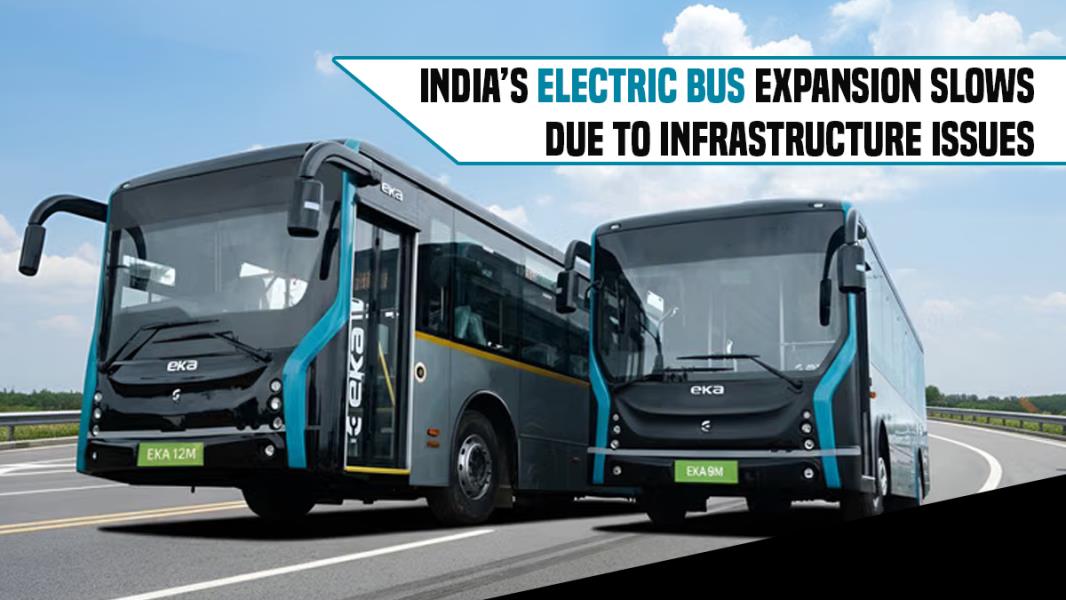
Table of Contents
| 1. Charging Problem is Bigger Than Expected |
| 2. High Cost Slows Down Adoption |
| 3. Financing is Still a Challenge |
| 4. Confusion Around Future Technology |
| 5. Final Thoughts |
► Read More: Hyundai–TVS Partnership to Build Future-Ready Electric Three-Wheelers
One major issue is with electric buses. On paper, they look like a good option, but ground reality is different.
Diesel buses can refuel in just few minutes at many petrol pumps. But electric buses need proper charging setup and charging can take one to four hours.
This means companies need big depot space for parking and charging. But many operators simply don’t have that kind of land available.
As explained, without space, charging setup is not possible. And without charging, electric buses cannot run. Simple but serious issue.
High Cost Slows Down Adoption
Cost is another big problem. Setting up charging is not cheap at all.
In one case shared during discussion, bringing power connection itself cost around ₹1 crore. That is even more than the charging equipment in some cases.
Also, operators have to pay for electricity usage after spending so much on setup. This makes the whole system expensive and difficult, especially for smaller fleet owners.
Financing is Still a Challenge
Money is also a big concern when it comes to loans. Banks are not very comfortable giving loans without proper security or assets.
Many operators don’t own land or big assets, so they struggle to get funding. This slows down adoption of electric buses even more.
There is also a suggestion that manufacturers should provide demo vehicles. This can help operators understand performance better before investing.
Confusion Around Future Technology
Another issue is confusion about which fuel will dominate in future. Options like diesel (Euro 6), electric and hydrogen are all being discussed.
Manufacturers are under pressure to upgrade technology, but final direction is still not fully clear.
Operators feel that buses will always be needed, but which type of buses will lead — that is still uncertain.
Final Thoughts
India wants to move fast towards modern transport, but ground situation is not fully ready yet.
Electric buses have potential, no doubt, but issues like land, cost and financing are slowing things down.
Until these basic problems are solved, large-scale shift may take more time than expected.
► You Might Like: Electric Truck Push: Drivn & Energy in Motion Plan 1,000 Deployments in India
Frequently Asked Questions on Commercial Vehicles
1. Why is electric bus growth slowing in India?
Ans: Due to lack of charging space, high setup costs and difficulty in getting finance.
2. What is the biggest challenge for electric buses?
Ans: The main issue is lack of depot space needed for charging infrastructure.
3. Are electric buses more expensive to set up?
Ans: Yes, initial costs like power connection and charging setup are quite high.
4. Will electric buses replace diesel buses soon?
Ans: Not immediately, as infrastructure and cost challenges still need to be solved first.
Join us for the latest updates on the Truck Industry -
☞ 
 Facebook
☞  Instagram
☞  YouTube
☞  Twitter
☞  LinkedIn
☞  Threads

About the Author

Amit Jangra
Amit Jangra is a dedicated content writer at TrucksBuses.com, a leading Indian portal for commercial vehicle insights. With a strong background in social work and a passion for the transportation sector, Amit brings a unique perspective to his writing. His articles are known for their clarity and depth, making complex topics accessible to a broad audience. Amit's commitment to empowering readers through informative content reflects his broader mission of societal upliftment.