Government Launches Bharat Zero Emission Trucking Policy Advisory to Push for Zero Emission Trucks
By | Published Date : July 07, 2025
The Indian government has taken a bold step towards a greener future with the launch of the Bharat Zero Emission Trucking (ZET) policy advisory. This new initiative, unveiled by the Principal Scientific Adviser to the Government of India, aims to transform the trucking sector and achieve 100 percent zero-emission truck sales by 2050. Let’s explore the key aspects of this ambitious policy and what it means for the future of trucking in India.
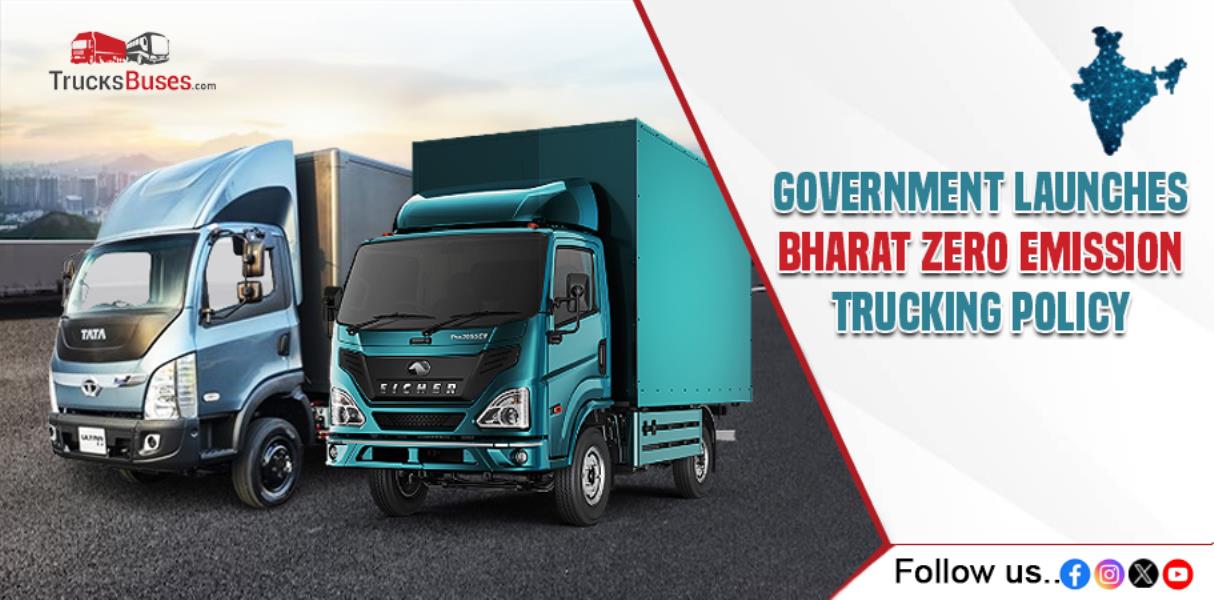
Unveiling the Bharat Zero Emission Trucking Policy Advisory
On a significant day at Vigyan Bhawan Annexe, New Delhi, Professor Ajay Kumar Sood, the Principal Scientific Adviser, introduced the Bharat Zero Emission Trucking (ZET) policy advisory. This document outlines nearly 30 policy interventions designed to drive a sustainable transition in India's trucking industry.
The goal is to support the country’s net-zero emissions target by 2070. To achieve this, NITI Aayog and the Ministry of Heavy Industries emphasize the need for truck electrification and the adoption of zero-emission trucks by 2050.
Overview of the Policy Advisory Document
The Bharat ZET policy advisory is a comprehensive guide aimed at promoting the adoption of zero-emission trucks. Professor Karthick Athmanathan, a PSA Fellow from IIT Madras, introduced the advisory document. Sharvari Patki, Program Head of Electric Mobility at the World Resources Institute, then summarized the policy, detailing the process and strategy behind the recommendations.
Details of the Zero Emission Trucking Policy Advisory 2024
The policy advisory includes about 30 interventions divided into five main categories:
- Infrastructure: Developing the necessary charging and maintenance infrastructure for zero-emission trucks.
- Business and Financing: Creating financial models and incentives to support the adoption of ZETs.
- Incentives: Offering performance-based incentives to encourage the use of zero-emission trucks.
- Regulation: Establishing regulatory frameworks to facilitate the transition to zero-emission trucking.
- Stakeholder-Centric Initiatives: Engaging with various stakeholders to ensure smooth implementation.
Each intervention outlines its impact, the formulation process, key stakeholders, and the nodal agency responsible for execution. For example, the document suggests that the Ministry of Heavy Industries conduct a global study on ZET demand incentives. This could help in developing a comprehensive understanding of ZET vehicle costs compared to traditional internal combustion engine (ICE) trucks, and potentially contribute to the proposed FAME 3 subsidy scheme.
Incentives and Implementation
The policy advisory highlights the importance of setting up ZET demand incentives. These incentives could be based on performance metrics such as energy consumption, range, and battery capacity. Additionally, incentives may be distributed through public sector undertakings (PSUs) to support government-owned fleets.
As part of the implementation strategy, there will be a thorough cost-benefit and impact analysis involving relevant ministries, departments, and institutes. The advisory also proposes creating toll-free highways for zero-emission trucks, which would require amending rule 11 of the National Highways Fee (Determination of Rates and Collection) Rules, 2008. This amendment would include zero-emission trucks in the category of vehicles exempt from toll charges.
Bharat Zero Emission Trucking Policy Advisory: Timeline and Implementation for Sustainable Transportation
The Bharat Zero Emission Trucking policy advisory represents a significant step towards sustainable transportation in India. The advisory sets a timeline of 12 to 14 months for the government to finalize these draft norms and turn them into formal policies. This period will be used to refine and implement the proposed measures, ensuring that the transition to zero-emission trucking is as smooth and effective as possible.
A Key Step Towards Sustainable Transportation
The launch of the Bharat Zero Emission Trucking policy advisory marks a crucial milestone in India's journey towards achieving zero emissions in the trucking sector. With nearly 30 policy interventions aimed at promoting zero-emission trucks, this initiative demonstrates the government’s commitment to reducing carbon emissions and supporting sustainable transportation.
The proposed measures, including incentives, infrastructure development, and regulatory changes, are designed to encourage the adoption of electric trucks and facilitate the shift away from traditional internal combustion engines. As the government moves forward with implementing these policies, the trucking industry can look forward to a greener, more efficient future.
Key Experts on Panel for Bharat Zero Emission Trucking Policy Advisory
The panel features several experts, including Reji Mathai, Director at the Automotive Research Association of India; S.A. Sundaresan, Vice President at Ashok Leyland focusing on new technologies; Sushant Naik, Global Head of Government and Public Affairs at Tata Motors; Pawan Mulukutla, Executive Program Director for Integrated Transport and Clean Air at WRI India; Saurabh Sood, Senior Transport Specialist at the World Bank; and Sneha Malhotra, former Chief Technology Officer at the Office of PSA. These professionals bring a range of expertise to the panel.
Conclusion
The Bharat Zero Emission Trucking policy advisory is a significant step toward a greener future for India’s trucking sector. With nearly 30 policy interventions, the initiative aims to drive the transition to zero-emission trucks by 2050. By focusing on infrastructure, incentives, and regulations, the policy seeks to address key challenges and promote sustainable transportation. As the government works to implement these measures, the trucking industry can expect a transformative shift towards cleaner, more efficient vehicles. This advisory represents a crucial effort in supporting India’s broader goal of achieving net-zero emissions by 2070.
Related Blog -
Fuel Efficiency Tips: How to Save Money at the Pump
Understanding Indian Truck Classification by Size and Payload Capacity